Can a beautiful garden really be achieved with ease, even for those new to cultivating their outdoor space?
I’ve always been fascinated by creating a stunning garden. I’m excited to share my expertise with you. As a beginner, it’s natural to feel overwhelmed. But with the right techniques and guidance, you can unlock the secrets to a gorgeous garden.
In this article, I will reveal the essential steps to follow. From preparing the soil to selecting the right plants. By the end, you’ll be equipped with the knowledge to start your gardening journey with confidence.
Understanding the Basics of Gardening
The journey to a gorgeous garden starts with learning the basics. Gardening has key principles that every gardener needs to know.
Importance of Soil Quality
Soil quality is crucial for a successful garden. It gives plants the nutrients, support, and water they need. To grow healthy plants, improving your soil quality is essential.
- Soil type: Knowing if your soil is clay, sandy, or loamy is important.
- Soil pH: Most plants do best in slightly acidic to neutral soil pH.
- Organic matter: Adding compost or manure boosts soil fertility.
Knowing Your Climate Zone
Knowing your climate zone is key in gardening. It helps pick plants that fit your local weather. In the UK, the Royal Horticultural Society has a guide for this.
- Find your area’s average frost dates.
- Know the temperature and rain patterns.
- Pick plants that match your climate zone.
Choosing the Right Plants
Picking the right plants is crucial for a thriving garden. Think about your garden’s sunlight, soil, and how much care you can give.
- Start with easy-to-grow plants like tomatoes, herbs, and marigolds.
- For shaded areas, try ferns and hostas.
- In sunny spots, sunflowers and lavender work well.
Preparing Your Garden Space
To grow a beautiful garden, start with the right preparation. This means several key steps. They make your garden look good and grow well.
Site Selection and Preparation
Choosing the right spot for your garden is key. Look for a place with the right sunlight and is level. Make sure it’s free from debris and weeds.
Assessing your site means checking drainage and soil. You can fix drainage with compost.
- Check the sunlight hours your garden receives.
- Clear the area of any debris and weeds.
- Test the soil to determine its type and nutrient level.
Tools and Equipment You’ll Need
Having the right tools is crucial for gardening. Start with basics like a garden fork, trowel, and watering can.
Essential tools include a rake for levelling, a hoe for weeding, and pruning shears for trimming.
- Garden fork for turning over the soil.
- Trowel for planting seeds and seedlings.
- Watering can or hose for irrigation.
Creating a Garden Layout
Designing your garden layout is fun. Think about how big your plants will get and leave space for them to grow.
A well-planned layout also considers paths and access. This makes caring for your garden easier.
- Sketch out a basic plan of your garden.
- Consider companion planting to maximise space and reduce pests.
- Leave adequate pathways for easy access.
Planting Techniques for Success
Planting is key to gardening. The right techniques lead to a good harvest. The first steps in planting greatly affect your garden’s health and productivity.
Sowing Seeds vs. Transplanting Seedlings
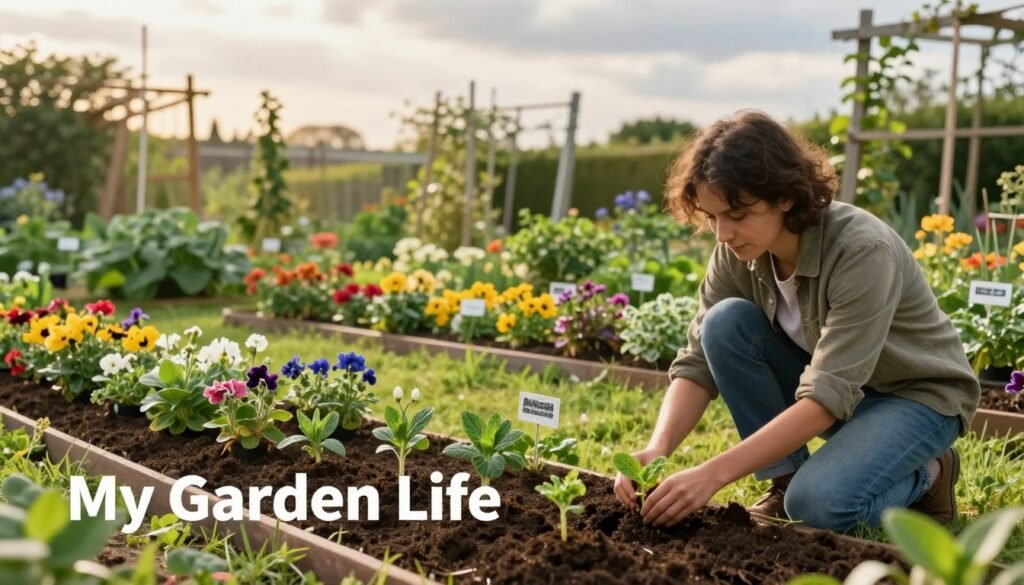
You can start your garden by sowing seeds or transplanting seedlings. Each method works best for different plants and conditions. Step-by-step gardening instructions can guide you in choosing the right method.
Sowing seeds directly helps plants grow strong roots. This is good for plants like carrots and radishes that don’t like being moved.
- Direct sowing is easier at first.
- It lets you control seed spacing.
- It’s better for root growth in some plants.
Transplanting seedlings gives your garden a boost, especially in cooler weather. Seedlings started indoors can be moved outside when it’s warmer. This is a great plant care tip for delicate plants.
- Transplanting can extend the growing season.
- It helps control early plant development.
- It’s better for tender plants.
Optimal Planting Depths and Spacing
How deep you plant seeds and how far apart they are is very important. Wrong depths or spacing can harm plants. Knowing these cultivating plants basics is essential.
Planting depths differ for each plant. A general rule is to plant seeds two to three times their diameter deep. But, some plants like lettuce need light to grow and should be sown on the surface.
- Check the specific sowing instructions for each type of plant.
- Adjust planting depth according to the size of the seed.
- Consider the light requirements for germination.
Spacing between plants is also crucial. Too close can cause disease and pests. The right spacing depends on the plant’s size. By following these plant care tips, your garden will thrive.
- Research the mature size of the plants you are growing.
- Plan your garden layout to accommodate adequate spacing.
- Consider using square foot gardening to maximise space.
Watering Wisely
Learning to water your plants well is key in gardening. It helps plants grow strong and saves water. You’ll learn how to water your garden just right.
Understanding Watering Needs
Every plant needs different amounts of water. For example, tomatoes need more than carrots. Knowing what your plants need helps you water them right.
Soil type, weather, and season also affect how much water plants need. Sandy soils dry fast and need more water. Clay soils hold water longer. I think about these things when I water.
Best Practices for Efficient Watering
Watering wisely means using less water and giving plants just the right amount. Water in the morning or evening to cut down on evaporation. Drip irrigation systems or soaker hoses save water compared to sprinklers.
Don’t overwater, as it harms plants. Check soil moisture with your finger or a moisture meter. These tips help your garden grow strong and save water.
Tools for Effective Watering
The right tools make watering easier. A watering can or hose with a spray nozzle lets you control the water. Drip irrigation systems and soaker hoses get water right to the roots, saving water.
Moisture meters and rain barrels are also helpful. They help you know when to water and save rainwater. Using these tools makes watering more efficient.
Incorporating Fertilisers and Amendments
As a gardener, using the right fertilisers and amendments is key. Fertilisers give plants the nutrients they need to grow well. Amendments make the soil better for plants.
Types of Fertilisers: Organic vs. Synthetic
Fertilisers are mainly organic or synthetic. Organic fertilisers come from nature, like compost and manure. They give nutrients slowly, making soil better over time. Synthetic fertilisers are made in labs and work fast.
Synthetic fertilisers can help plants grow quickly. But, they can hurt the soil if used too much. Organic fertilisers take longer but make the soil better for a long time.
When and How to Apply Fertiliser
When and how you use fertiliser matters a lot. First, test your soil to see what nutrients it has. This helps you pick the right fertiliser.
- Use fertiliser when plants are growing fast.
- Use the amount the maker says to avoid too much.
- Water plants well after fertilising to help nutrients get to the roots.
Knowing about fertilisers and how to use them can make your garden better. It keeps the soil healthy too.
Managing Pests and Diseases
Learning to spot and handle pests and diseases is key to gardening success. It’s important to know the common problems and how to fix them.
Common Garden Pests
Gardens face many pests like aphids, slugs, and snails. These can harm plants a lot if not stopped. Spotting the pest first is crucial to control it. Aphids live on the underside of leaves and look soft and small.
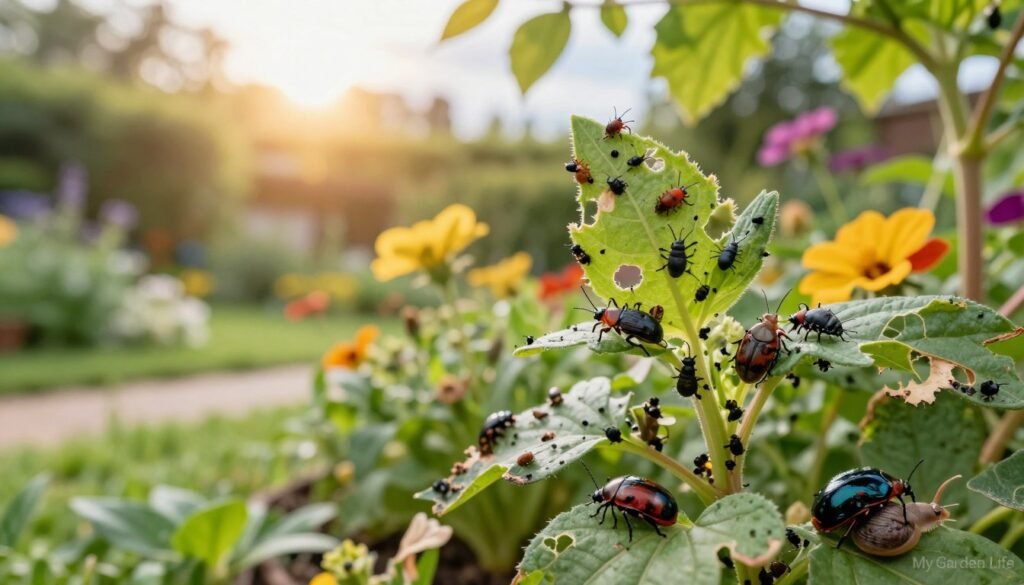
To fight aphids, spray them off with water or use insecticidal soap. Slugs and snails can be kept away by removing hiding spots and using traps or copper tape.
Organic Pest Control Methods
Organic pest control is a green way to keep pests away. It includes using good bugs like ladybugs and lacewings. Planting certain plants together can also keep pests away. For example, marigolds with tomatoes can stop nematodes.
Other green methods are neem oil and diatomaceous earth. Neem oil comes from neem seeds, and diatomaceous earth is a powder that dries out pests.
Signs of Plant Diseases
Diseases in plants come from fungi, bacteria, or viruses. Look out for discolored leaves, black spots, and powdery mildew. Checking your plants often is key to catching diseases early. For fungal diseases, cut off sick leaves and improve air flow to stop it spreading.
Knowing the signs of plant diseases and acting fast can save your garden from damage.
Encouraging Biodiversity
As I tend to my garden, I see how vital biodiversity is. A biodiverse garden fights off pests and diseases better. It also becomes a home for many animals.
Promoting biodiversity means more than just growing different plants and veggies. It’s about making a balanced garden ecosystem. We must understand how plants and animals work together. This helps create a space that supports them all.
Planting Native Species
Planting native species is a great way to boost biodiversity. Native plants fit well with the local weather and soil. They need less care and help.
- Native plants feed and protect local wildlife like birds, bees, and butterflies.
- They keep the soil healthy and stop it from washing away.
- Native plants fight off local pests and diseases, cutting down pesticide use.
Attracting Pollinators to Your Garden
It’s key to draw in pollinators for many plants to grow. By adding plants that pollinators love, your garden’s biodiversity will grow.
- Grow a mix of flowers that have lots of nectar and pollen, like sunflowers and lavender.
- Stay away from pesticides, as they can harm or kill pollinators.
- Make your garden welcoming by offering shelter and water for pollinators.
By using these tips and gardening sustainably, you can make a garden that’s not just pretty. It also helps local wildlife thrive.
Seasonal Gardening Tips
To keep your garden looking great, learn about seasonal tips for the UK. The weather can be unpredictable, but with the right plan, your garden will flourish all year.
Spring Planting Essentials
Spring is key for planting flowers, veggies, and herbs. Follow these step-by-step gardening instructions for the best results:
- Get your soil ready with compost or manure.
- Pick plants that do well in UK spring, like daffodils and peas.
- Make sure your garden is clean of debris and weeds.
Summer Maintenance Strategies
Summer is when your garden grows the most. Here’s how to keep it in top shape:
- Water plants deeply but not too often to help roots grow.
- Use mulch to keep moisture in and weeds out.
- Watch for pests and diseases and act fast.
Autumn Preparations for Winter
As autumn comes, prepare your garden for winter. Here’s what to do:
- Remove dead plants and debris to stop disease.
- Plant bulbs for spring flowers.
- Protect plants from frost with covers or bring them inside.
By following these tips, your garden will stay healthy and beautiful all year. Whether you’re growing vegetables in your garden or enjoying flowers, being ready for each season is crucial.
Harvesting Your Bounty
There’s nothing better than harvesting your garden’s fruits. Growing plants from seeds to harvest is very rewarding. I’ll show you when to pick different crops and how to get the most from your garden.
When to Harvest Different Crops
Knowing when to pick your crops is key. Tomatoes are ready when they’re fully coloured and a bit soft. Leafy greens like lettuce and spinach are best when young and tender.
Vegetables: Check if carrots and beets are ready by digging around them. They’re ready when they’re the right size.
Fruits: Strawberries and raspberries are ready when they’re fully coloured and easy to pick.
Best Practices for Harvesting
Follow best practices to keep your produce fresh. Use clean, sharp tools to avoid harming the plants. Harvesting in the morning, after the dew, helps keep things fresh.
- Handle produce gently to avoid bruising or damaging it.
- Regular harvesting encourages many plants to continue producing. For example, frequent picking of beans and peas promotes further flowering and production.
- Remove any diseased or damaged produce to prevent the spread of disease to other plants.
By following these tips, you’ll enjoy a great harvest. Happy harvesting!
Sustainable Gardening Practices
Being a gardener means using green practices. This makes your garden healthy and helps the planet. Eco-friendly gardening is key to a thriving garden.
Composting 101
Composting is vital for a green garden. It turns waste into something good for your garden. You can make compost from kitchen scraps and leaves.
To compost, mix green and brown materials. Green stuff is like vegetable peels. Brown stuff is dried leaves. Use 2/3 brown and 1/3 green.
- Collect kitchen scraps and yard waste in a compost bin.
- Layer green and brown materials for a balanced pile.
- Turn the compost often for better aeration.
Following these step-by-step gardening instructions makes great compost. This improves your garden’s soil and health.
Water Conservation Techniques
Water saving is key in gardening. Good watering habits save water and keep your garden healthy.
Some ways to save water include:
- Use drip irrigation or soaker hoses to water roots.
- Water in the early morning or evening to cut down on evaporation.
- Collect rainwater in barrels for dry times.
Using these best practices for garden maintenance helps your garden thrive. It also helps the planet.
Keep learning about gardening techniques for beginners and more. Every small change helps a lot.
Continuing Your Gardening Education
As you move forward in gardening, it’s key to keep learning. Whether you’re experienced or new, there’s always more to learn. Improving your gardening skills is important.
Gardening Resources
Look into books and online courses to boost your gardening. The Royal Horticultural Society website is a great place to start. It has lots of tips for beginners.
Local Gardening Communities
Joining local gardening groups is a great idea. You’ll meet other gardeners, share tips, and stay excited about gardening. These groups often have workshops and lectures.
Keep learning and join local gardening groups. This will help you make your garden even better.