Starting your vegetable gardening journey can be exciting and a bit scary. You might wonder, “How do I begin?” and “What are the key tips for a good harvest?” At My Garden Life, we get it. We know the thrill and the hurdles of starting your garden.
Remember the joy of picking your first home-grown food? We do too. We’re here to share our knowledge with you. This article will be your guide to vegetable gardening for beginners. We’ll cover the basics and more to help you start strong.
Our best tips will steer you clear of common errors. They’ll also boost your gardening experience. This way, you’ll grow your own food with confidence.
Understanding Vegetable Gardening Basics
Starting a vegetable garden is exciting. First, you need to know the basics. These basics help your garden grow well and produce lots of food.
Importance of Soil Quality
Soil quality is key for a great garden. The soil type affects how well your plants grow. Soil that’s good for plants is important.
To make your soil better, add compost or manure. These help your soil hold water and nutrients better.
- Test your soil to know its pH and nutrients.
- Use compost or manure to make your soil richer.
- Mulch helps keep moisture in and weeds out.
Choosing the Right Location
Finding the right spot for your garden is crucial. Most veggies need lots of sunlight. So, pick a spot that gets at least six hours of direct sunlight a day.
The area should also drain well. This stops water from making the soil soggy. Soggy soil can harm your plants.
- Look for a sunny spot.
- Make sure it’s flat and drains well.
- Choose a spot that’s easy to get to for upkeep.
Learning these basics will help you grow a great vegetable garden. Next, we’ll talk about the tools you’ll need.
Essential Tools for Vegetable Gardening
Starting a vegetable garden needs the right tools. The right equipment makes gardening easier and more fun.
Must-Have Gardening Tools
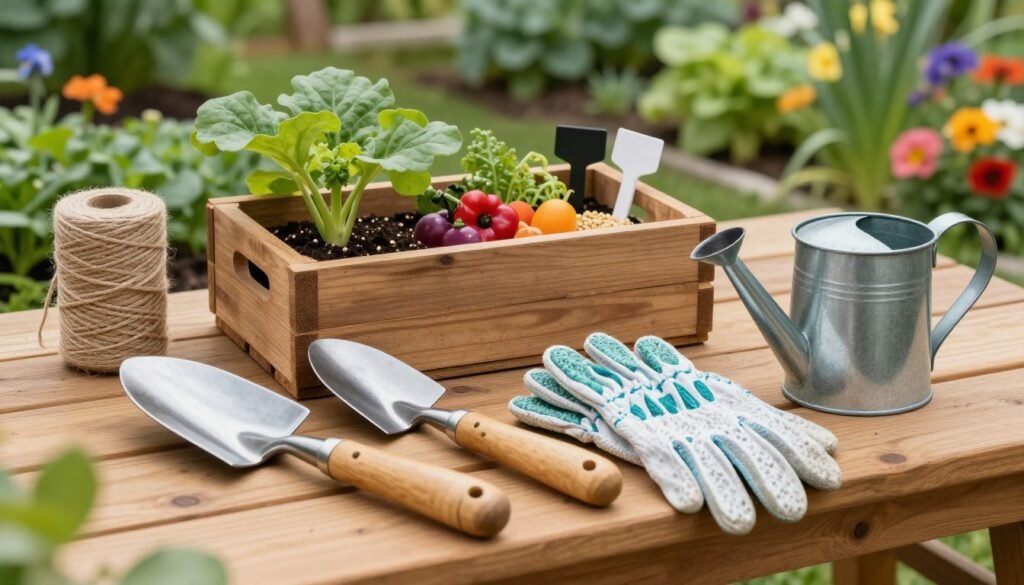
First, you need some basic tools. These are:
- Trowels for digging and moving plants.
- Rakes for getting the soil ready and even.
- Watering cans or hoses for watering plants well.
- Gardening gloves to keep your hands safe from thorns and dirt.
- Pruning shears for cutting and shaping plants.
Optional Tools for Efficiency
There are also tools that can make gardening better. These include:
- Irrigation systems that water plants for you, saving time and effort.
- Garden kneelers that make gardening comfortable for your knees.
- Soil test kits to check and fix your soil’s pH levels.
- Gardening tool sets that keep your tools tidy and easy to find.
Using these tools can make gardening more enjoyable. You can spend more time enjoying your garden.
Selecting Vegetables Suitable for Our Climate
Knowing which vegetables grow well in the UK is important. The UK’s cool winters and mild summers are great for many vegetables. But, picking the right ones for your garden is crucial.
Best Vegetables for the UK Climate
Beginners should start with easy-to-grow vegetables that handle the UK’s weather well. Some top picks are:
- Carrots
- Peas
- Radishes
- Lettuce and other leafy greens
- Herbs like mint and parsley
These veggies are tough and need little care. They’re great for new gardeners.
Seasonal Planting Guide
To keep your garden full of fresh veggies, use a seasonal planting guide. Different veggies do best at different times:
- Spring: Plant peas, broad beans, and early potatoes.
- Summer: Sow courgettes, runner beans, and tomatoes.
- Autumn: Plant brassicas like broccoli and cauliflower.
- Winter: Grow hardy veggies such as kale and Brussels sprouts.
Following this guide helps beginners have a lively and varied garden all year.
Planning Your Vegetable Garden Layout
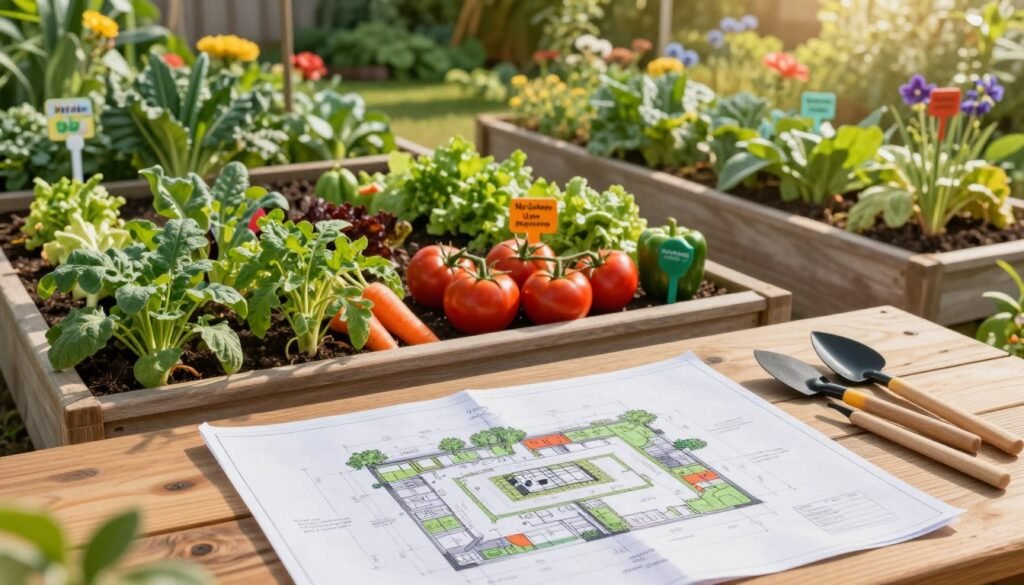
To get the most from your garden, planning is key. A good layout makes your garden look great and helps your veggies grow well.
Think about the space you have and how to use it best. Choose the right plants to grow together and manage your space well.
Companion Planting Strategies
Companion planting means growing different plants together. Some plants keep pests away, while others attract good bugs or improve soil. For instance, marigolds with tomatoes keep nematodes off, and basil makes tomatoes taste better.
- Marigolds with tomatoes to deter nematodes
- Basil with tomatoes to enhance flavour
- Radish with cucumbers to deter cucumber beetles
Space Management Techniques
Managing space is important, even in small gardens. Using raised beds, vertical gardening, and crop rotation can help a lot.
Raised beds help with drainage and warm soil, letting you plant earlier. Vertical gardening uses trellises for climbing plants like peas and beans, saving space.
- Use raised beds for improved drainage and warmer soil
- Implement vertical gardening for climbing plants
- Practice crop rotation to maintain soil fertility
Using these beginner-friendly vegetable gardening techniques will help your garden thrive. Remember, a good garden needs good planning and care.
Soil Preparation and Fertilisation
To grow a successful vegetable garden, soil preparation and fertilisation are key. Soil gives nutrients and support to your plants. Good preparation and fertilisation boost your garden’s health and yield.
Testing Soil pH
Soil pH is crucial for vegetable growth. Most veggies like a slightly acidic to neutral soil pH, between 6.0 and 7.0. Testing your soil pH is the first step in preparing your garden. You can use a soil testing kit or send a sample to a lab for analysis. Adjust your soil’s pH with lime or sulphur based on the results.
Types of Fertilisers to Use
Fertilisers give plants the nutrients they need. There are organic and inorganic types. Organic fertilisers, like compost and manure, release nutrients slowly and improve soil structure. Inorganic fertilisers give quick nutrients but don’t improve soil health long-term. For beginners, organic options are a good start.
Choose a fertiliser based on your veggies’ needs. Some need more nitrogen, phosphorus, or potassium. A balanced fertiliser with an NPK ratio of around 10-10-10 is a good starting point. Always follow the manufacturer’s instructions to avoid harming your plants and the environment.
Watering Techniques for Optimal Growth
Watering your vegetable garden right is key for a good harvest. We’ll look at the best ways to water your veggies. We’ll also talk about the benefits of using irrigation systems.
Best Watering Practices
Watering your veggies correctly is important. Avoid overwatering and underwatering to keep plants healthy. Water in the early morning to help plants absorb water better. This reduces evaporation and stops fungal diseases.
To see if your plants need water, check the soil. Stick your finger into the soil up to your knuckle. If it’s dry, water them. If it’s moist, wait a day before watering again.
Using Irrigation Systems
Irrigation systems make watering your garden more efficient. Drip irrigation and soaker hoses water plants directly. This saves water and helps roots grow strong.
- Drip irrigation is great for gardens with different plants. It waters each plant just right.
- Soaker hoses give plants a steady water supply. They’re efficient and effective.
Think about your garden’s layout when using irrigation systems. Good planning ensures all plants get enough water.
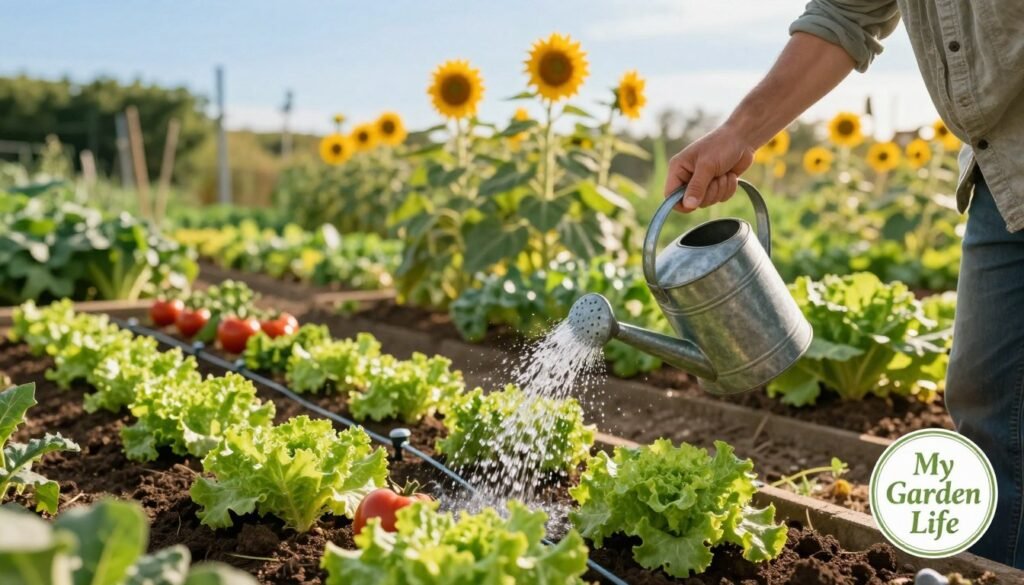
Using these watering tips and irrigation systems can boost your garden’s health. Remember, successful gardening needs attention to detail and flexibility.
Pest Control and Management Strategies
Managing pests is a big challenge in vegetable gardening. Good pest control is key for a successful harvest. There are many ways to protect your crops.
Common Pests to Watch For
Many pests can harm your garden, like aphids, slugs, snails, and caterpillars. Regular monitoring helps spot these pests early. This way, you can act fast before they damage your crops a lot.
- Aphids: These small, sap-sucking insects live on the undersides of leaves and stems.
- Slugs and Snails: Active at night, they can harm leaves and tender shoots.
- Caterpillars: The young of butterflies and moths, they eat through leaves and fruit.
Organic Pest Control Methods
Organic pest control is good for the environment and keeps your veggies safe. Some effective methods include:
- Encouraging Natural Predators: Ladybugs and lacewings help control aphids.
- Physical Barriers: Fine mesh or netting stops pests like butterflies from laying eggs.
- Organic Pesticides: Neem oil and insecticidal soap control many pests.
By using these strategies, you can manage pests well. This ensures a healthy and productive harvest.
Harvesting and Storing Your Crops
As we near the end of our vegetable gardening journey, harvesting and storing your crops effectively is crucial. For beginners, knowing when to pick and how to store is key. It makes a big difference in the quality and how long your produce lasts.
Timing is Everything
Knowing when to harvest your easy vegetables is vital. Most vegetables are ready when they are at their peak colour and size. For example, tomatoes should be fully coloured, and carrots should be between half to three-quarters of an inch in diameter.
Checking the specific harvesting times for each vegetable will help you get the best out of your garden.
Best Practices for Storage
Once harvested, storing your vegetables correctly is key to keeping them fresh. Cool, dry places are best for storing vegetables like potatoes and onions. Leafy greens should be kept in the fridge to stay crisp.
By following these tips, you can enjoy your homegrown produce for longer.