Starting a vegetable garden layout needs a good plan. For UK gardeners, making a veggie patch can seem hard, even for beginners.
We know the challenges and are here to help. Good veggie garden planning means knowing your garden and picking the right veggies. This way, you’ll have a productive and fun outdoor space.
At My Garden Life, we share expert tips for a big harvest. We aim to give you useful insights and practical advice for a successful gardening journey.
Understanding Your Garden Space
Knowing your garden well is key to growing veggies. You must look at its special conditions to make it flourish.
Assessing Sunlight and Shade
How much sun your garden gets is very important. Most veggies need at least 6 hours of direct sunlight a day. Watch your garden during the day to find the sunniest and shadiest spots.
- Record the areas that receive full sun, partial shade, and full shade.
- Consider using shade cloth or other shading methods for plants that are sensitive to direct sunlight.
- Utilize sun traps or reflective surfaces to maximize sunlight in shadier areas.
Measuring Your Plot Size
Knowing your garden’s size is crucial for planning. Measure its length and width to find its total area.
Tips for measuring your plot:
- Use a measuring tape to get accurate dimensions.
- Divide the garden into sections if it has varying conditions.
- Record your measurements to refer to when planning your veggie layout.
Soil Quality and Preparation
Soil quality is very important for growing veggies. Testing your soil will show its pH level and nutrient content.
- Use a soil testing kit to determine your soil’s pH and nutrient levels.
- Add organic matter like compost or manure to improve soil structure and fertility.
- Consider sustainable gardening practices such as crop rotation and cover cropping to maintain soil health.
By following these steps and using organic gardening tips, you can make a great veggie garden. It will be healthy and meet your needs.
Choosing the Right Veggies for Your Region
To get the most from your veggie garden, pick varieties that love the UK’s climate. The UK’s weather and soil change a lot. Knowing your local weather and soil helps you choose the best veggies.
Climate Considerations for the UK
The UK’s weather changes a lot from north to south and from coast to inland. The south is warmer and sunnier than the north. Think about your area’s average temperature, rainfall, and sunlight when picking veggies. Cool-season crops like broccoli and kale love the cooler, wetter north. Warm-season crops like tomatoes and peppers prefer the sunny south.
Seasonal Planting Guidelines
Knowing when to plant is key for a good harvest. In the UK, the last frost date tells you when to plant tender veggies like tomatoes and courgettes. Spring is when you start sowing many veggies. But, some can be planted in autumn or winter for an early harvest next year. A gardening calendar helps plan the best times to sow and harvest.
Popular Veggies for British Gardens
Some veggies are perfect for British gardens. Root veggies like carrots and beetroot, leafy greens like lettuce and spinach, and brassicas like cabbage and cauliflower are great. Tomatoes, peas, and runner beans are also favourites and grow well in many UK spots. Raised beds help with drainage and soil quality.
Here are some top tips for growing popular veggies in the UK:
- Choose varieties that are resistant to common UK pests and diseases.
- Prepare your soil with organic matter to improve its structure and fertility.
- Make the most of the sunlight by positioning taller plants to avoid shading smaller ones.
Creating a Planting Schedule
Creating a planting schedule for the UK’s climate can boost your garden’s output. A good plan helps you use the growing season well. It stops overcrowding and bad harvests.
Timing Your Sowing and Harvesting
Knowing when to plant and harvest is key. Each veg has its own growing time. Planting at the right time means a steady harvest all season.
For example, plant lettuce and spinach early in spring. Tomatoes and courgettes go in when the soil warms up.
Here’s a simple guide:
- Start with hardy veggies like broccoli and kale in early spring.
- Put in tender ones like tomatoes and peppers in late spring.
- Direct sow beans and courgettes in late spring to early summer.
Using a Gardening Calendar
A gardening calendar is vital for planning. It shows when to plant different veggies. Marking important dates, like the last frost, helps plan sowings.
To make your calendar, note:
- The average frost dates for your area.
- The best times to sow your chosen veggies.
- Any special care needs, like pruning or feeding.
Companion Planting Tips
Companion planting boosts garden diversity and output. It can keep pests away, help veggies grow, and even taste better. For instance, marigolds with tomatoes fight nematodes. Basil near tomatoes makes them taste better.
Try these good pairs:
- Marrows with nasturtiums to keep aphids away.
- Carrots with sage for better growth.
- Beans with corn and squash for a ‘Three Sisters’ setup.
Designing Your Garden Layout
Creating a good garden design is key for a successful veggie garden. A well-designed garden looks great and helps grow more food. We’ll show you how to design your garden, from raised beds to vertical gardening.
Raised Beds vs. Traditional Rows
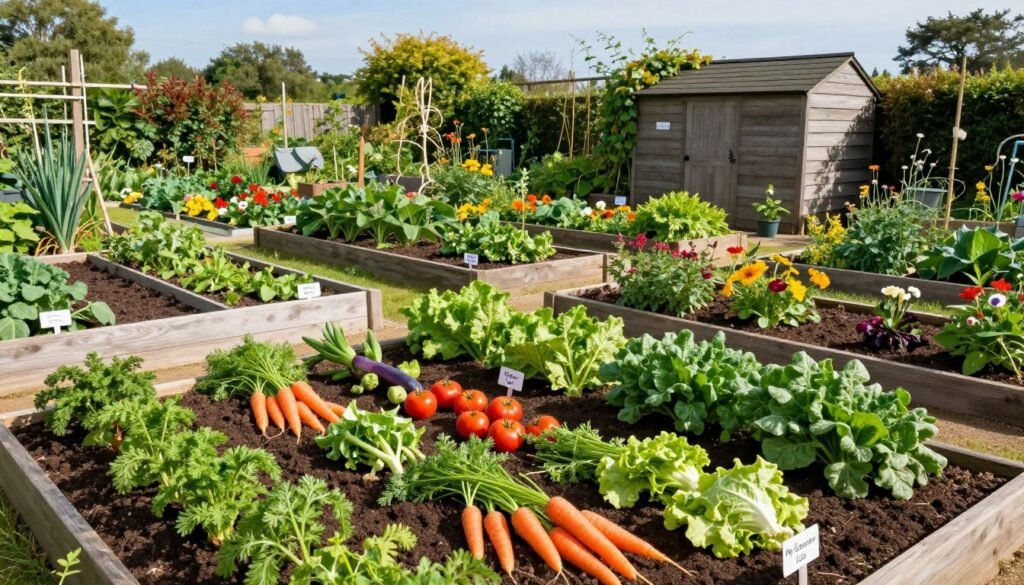
Choosing between raised beds and traditional rows is a big decision. Raised beds are great because they drain well, warm up faster, and are easy to get to. They’re perfect for people with mobility issues.
Traditional rows are simpler to set up, but harder to keep up. They need more work to weed and prevent soil from getting compacted.
Key benefits of raised beds include:
- Better soil structure and drainage
- Warmer soil temperatures for earlier planting
- Improved accessibility for gardeners
So, it’s up to you to decide between raised beds and traditional rows. It depends on what you need and like.
Efficient Spacing for Healthy Growth
Spacing plants right is key for healthy growth and more food. Too close together means less light, water, and nutrients. This can lead to diseases and pests.
Think about how big each plant will get and leave enough space. Some plants, like tomatoes, need more room. Others, like lettuce, can be closer together.
Tips for efficient spacing:
- Research the spacing needs for each veggie
- Use a gardening calendar to plan your planting
- Think about companion planting to save space and fight pests
Vertical Gardening Opportunities
Vertical gardening is great for small spaces. It adds depth and interest to your garden. It also helps plants grow better and keeps air moving, which fights disease.
You can use trellises, arbors, and wall planters for vertical gardening. Plants like peas and beans are perfect for this.
Popular vertical gardening ideas:
- Using trellises for climbing plants
- Creating a living wall with wall-mounted planters
- Incorporating arbors for extra support
Soil Preparation and Conditioning
Soil preparation is key for UK gardeners wanting a great veggie garden. It’s about making the soil rich in nutrients for healthy plants.
Testing Soil pH and Nutrients
First, know your soil’s pH and nutrient levels. Use a soil testing kit to find out. Soil testing kits are easy to find at gardening stores and online.
After testing, you can fix your soil’s pH and add missing nutrients. For example, lime can make acidic soils more alkaline. Elemental sulphur does the opposite for alkaline soils.
Adding Organic Matter
Adding organic matter improves your soil. This can be compost, manure, or peat moss. Mixing in 2-3 inches of organic matter can make your soil hold water better and breathe.
- Compost: Rich in nutrients and beneficial microbes
- Well-rotted manure: Adds nutrients and improves soil structure
- Peat moss: Helps retain moisture and suppresses weeds
Choosing the Right Fertiliser
Choosing a fertiliser can be hard with so many options. Organic fertilisers like fish, bone, or seaweed are good. They give nutrients slowly and help soil health. Always follow the manufacturer’s instructions to avoid too much fertiliser.
Watering Techniques for Success
The right way to water can really help your veggie garden grow well. In the UK, we need to save water but still keep our plants moist. Here, we’ll look at good ways to water your garden.
Irrigation Methods
It’s important to know about different ways to water. We can pick from drip irrigation, soaker hoses, and sprinkler systems. Drip irrigation is great because it waters the roots directly, cutting down on evaporation and runoff.
- Drip irrigation systems
- Soaker hoses
- Sprinkler systems
Choosing the right method can save a lot of water and help plants grow strong. For example, drip irrigation cuts down on evaporation and makes sure water gets to the roots.
Rainwater Harvesting Solutions
Collecting rainwater is a smart way to use less mains water. It’s a natural and cheap way to water your plants. You can start by putting a barrel under a downspout.
Collecting rainwater has many benefits:
- It can lower your water bills
- It helps local water resources
- It’s a natural water source for plants
Maintaining Soil Moisture
Keeping the soil moist is key for a healthy garden. Mulch helps keep moisture in and stops weeds. Adding organic matter to the soil also helps it hold water better.
To keep the soil just right, try these:
- Use organic mulch
- Add compost or well-rotted manure
- Check the soil moisture often
By using these tips, we can make our veggie garden more sustainable and water-efficient.
Pest and Disease Management
Keeping a veggie garden healthy means managing pests and diseases well. We can use natural methods to avoid chemical pesticides. This keeps our plants healthy and helps the garden grow sustainably.
Natural Pest Control Methods
Natural pest control is safe for the environment. We can use physical barriers, companion planting strategies, and attract natural predators. Companion planting is very helpful. For instance, marigolds can keep nematodes away from tomatoes.
- Using physical barriers
- Practicing companion planting
- Encouraging natural predators
Identifying Common Diseases
Many diseases can harm veggie gardens, like fungal infections and viral diseases. It’s important to watch for signs like discoloration and wilting. Spotting diseases early helps stop them from spreading.
Encouraging Beneficial Wildlife
Having beneficial wildlife is key to a healthy garden. We can attract them by planting different flowers and herbs. We should also avoid using harmful pesticides. These organic gardening tips make our garden a welcoming place for wildlife.
- Planting diverse flowers and herbs
- Providing habitat for beneficial creatures
- Avoiding broad-spectrum pesticides
Harvesting and Storing Your Produce
After months of planning your veggie garden, it’s time to harvest. Knowing how to harvest and store is key to enjoying your hard work all year.
Optimal Harvest Times
It’s important to know when to pick your crops. Check your plants often. The best time to harvest changes with each vegetable type.
Leafy greens are ready when they’re tender. Root veggies like carrots are best when they’re fully coloured.
Preserving Your Harvest
There are many ways to keep your produce fresh all year. Freezing is great for peas and broccoli. Canning works well for tomatoes and cucumbers.
Dehydrating is another choice. It lets you store dried veggies like onions and herbs.
Savouring the Rewards
Eating your own garden’s produce is very rewarding. You’ve planned and grown your veggie garden well. Now, enjoy the taste and health benefits of your hard work.