Welcome to My Garden Life. Starting a garden can seem hard. But with the right help, anyone can make a lovely garden.
We loved watching our first garden bloom. We’re excited to help you feel the same joy. This article will teach you how to pick the best flowers and care for them. It will make starting your garden a breeze.
We want to share our knowledge to help you begin your gardening adventure. We hope you’ll feel confident and inspired to grow your own garden.
Understanding the Basics of Gardening Flowers
To make a flower garden bloom, you need to know the basics. Our guide will show you how to garden flowers easily. You’ll learn tips for a stunning garden.
Importance of Choosing the Right Flowers
Picking the right flowers is key for a great garden. Flowers need different things like sunlight, water, and soil. Choose flowers that fit your climate and soil for easy care.
If it’s dry where you live, pick flowers like succulents or lavender. For shaded areas, impatiens or begonias are better.
Essential Tools for Flower Gardening
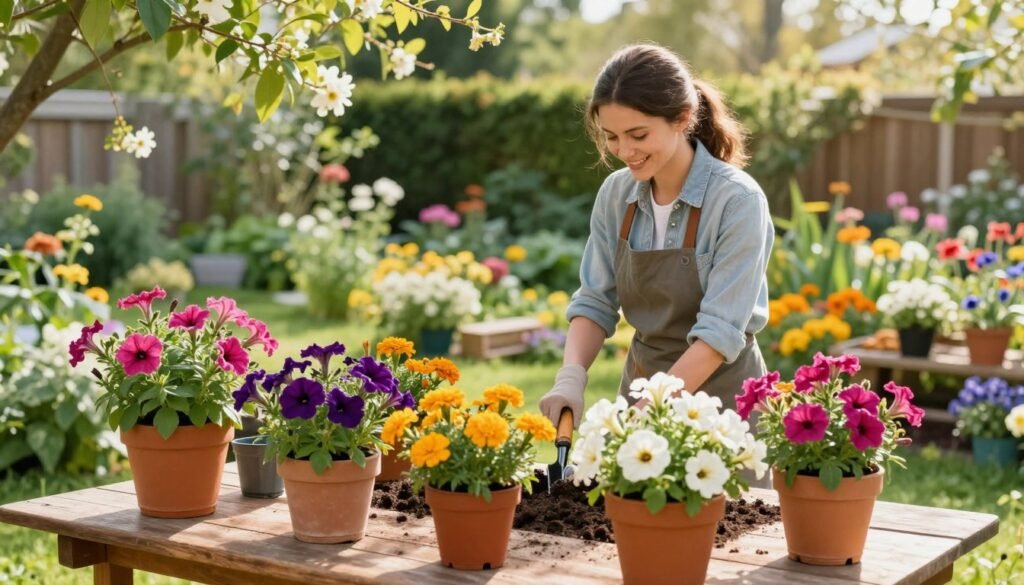
Right tools make gardening easier and better. You’ll need a trowel for planting, pruning shears for trimming, and a way to water.
- A trowel or small shovel for digging holes for plants
- Pruning shears for cutting back plants and deadheading flowers
- A watering can or hose with a spray nozzle for watering
- Gardening gloves to protect your hands from thorns and dirt
Soil Requirements and Preparation
Soil quality affects your flowers’ health and growth. Most flowers like well-draining, organic-rich soil.
To get your soil ready, test its pH and nutrients. Then, add compost or fertilizer as needed.
Compost is great because it adds nutrients and helps soil structure. It also supports good microbes.
Selecting the Best Flowers for Beginners
Choosing the right flowers can seem hard for new gardeners. But, with the right help, it’s easy to start. At My Garden Life, we help you pick the best flowers for your garden.
It’s key to pick flowers that are easy to grow and need little care. Beginner-friendly flowers are hardy and can grow well in many conditions.
Top Beginner-Friendly Flowers
Some great flowers for new gardeners are:
- Marigolds: These bright flowers are easy to grow and brighten up any garden.
- Zinnias: These colourful blooms are simple to care for and come in many colours.
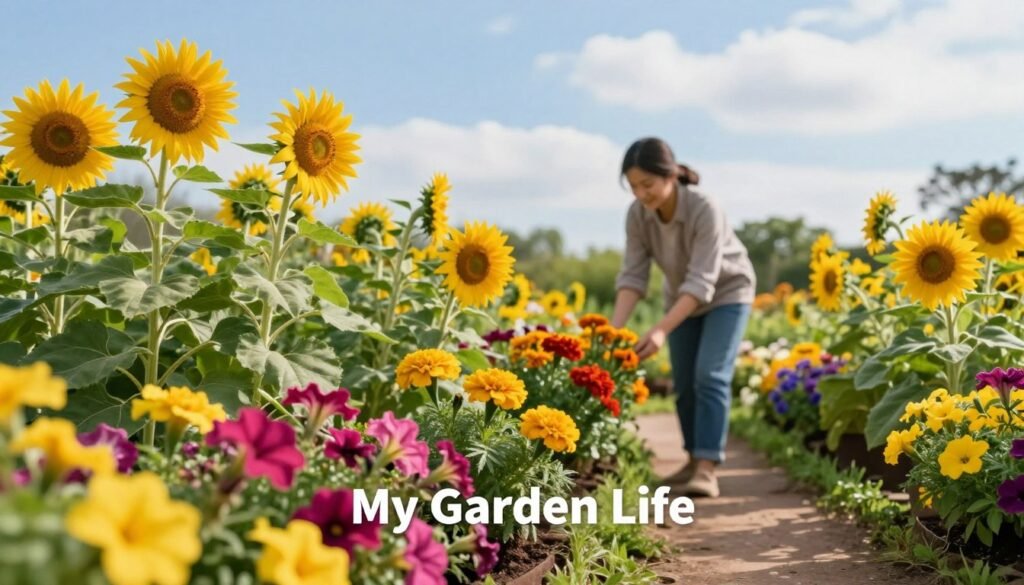
- Sunflowers: With their tall stems and bright yellow petals, sunflowers are a favourite for beginners.
Seasonal Considerations for Flower Selection
Seasons matter when picking flowers. Different flowers do well in different times. Picking the right ones for the season helps them grow well.
Spring is great for planting bulbs like tulips and daffodils. Summer is best for annuals like petunias and geraniums.
Site Preparation and Planting Techniques
To start with flower gardening, learning about site prep and planting is key. It’s important for flowers to grow well, whether from seeds or seedlings.
Choosing the Ideal Location
Finding the perfect spot for your garden is the first step. Most flowers need ample sunlight and well-draining soil. Make sure the spot gets enough sun and drains well.
Think about how big the plants will get. Too many plants can fight for light, water, and food. Space them right to avoid this.
Planting Techniques for Different Flower Types
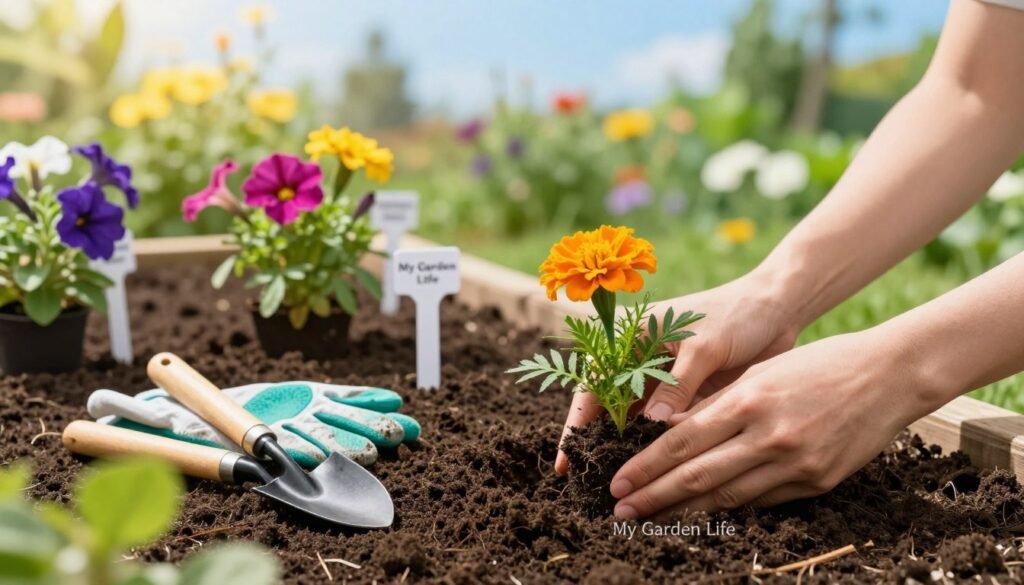
Each flower has its own planting needs. For growing flowers from seeds for beginners, sow them correctly. Some, like marigolds and zinnias, are easy and need little care.
For seedlings, like roses and geraniums, plant them gently. Make sure the soil is ready with the right nutrients.
- Check the seed packet or plant label for specific instructions on planting depth and spacing.
- Water the soil gently but thoroughly after planting.
- Keep the soil consistently moist during the establishment phase.
Follow these tips and pick the right spot for your garden. At My Garden Life, we’re here to help you every step of the way.
Caring for Your Flower Garden
To keep your flower garden thriving, it’s crucial to understand the basics of flower care. At My Garden Life, we believe that with the right techniques, anyone can enjoy a beautiful and flourishing garden.
Caring for your flowers involves several key aspects, including watering, fertilising, and protecting your plants from pests and diseases. By mastering these simple steps, beginner flower gardeners can achieve remarkable results.
Essential Watering Tips
Watering is one of the most critical aspects of flower care. Overwatering can be just as harmful as underwatering, so it’s essential to strike the right balance.
- Check the soil moisture by inserting your finger into the soil up to the knuckle.
- Water your flowers in the early morning or late evening to minimise evaporation.
- Avoid getting water on the leaves to prevent fungal diseases.
By following these simple steps for beginner flower gardeners, you can ensure your flowers receive the right amount of water.
Fertilising Your Flowers Effectively
Fertilising provides your flowers with the necessary nutrients for healthy growth and blooming. Choosing the right fertiliser is crucial for optimal results.
- Select a balanced fertiliser that contains equal parts nitrogen, phosphorus, and potassium.
- Fertilise your flowers during the growing season, typically in spring and summer.
- Follow the instructions on the fertiliser package for the correct dosage.
Growing flowers from seeds for beginners requires careful fertilisation to promote healthy seedling development.
Dealing with Pests and Diseases
Pests and diseases can significantly damage your flower garden if left unchecked. Regular monitoring and prompt action are essential to prevent infestations and infections.
- Inspect your plants regularly for signs of pests or diseases.
- Use organic or chemical controls as needed to address any issues.
- Maintain good garden hygiene by removing weeds and debris.
By following these guidelines, you can protect your flower garden and enjoy a vibrant display of blooms throughout the growing season.
Seasonal Gardening Tasks
To keep your flower garden looking its best, it’s essential to understand the tasks required for each season. As we journey through the year, the needs of our garden change. Being aware of these changes is key to maintaining a vibrant and healthy garden.
Spring: Preparing Your Garden
Spring is a time of renewal and preparation for the coming growing season. It’s the perfect time to start getting your garden ready for the new flowers.
- Clear away any debris that has accumulated over winter.
- Prepare the soil by adding organic matter such as compost.
- Begin planting spring bulbs and early-flowering annuals.
By following these simple steps, beginner flower gardeners can set their gardens up for success.
Summer: Maintenance and Enjoyment
Summer is the peak growing season, and your garden will require regular maintenance to keep it looking its best.
- Water your flowers regularly, even during dry spells.
- Deadhead flowers to encourage more blooms.
- Keep an eye out for pests and diseases, and take action promptly if you notice any issues.
Enjoy the fruits of your labour and take time to appreciate the beauty of your garden.
Autumn: Planning for the Next Year
Autumn is a critical time for planning and preparing your garden for the next growing season.
- Clear away spent flowers and foliage.
- Plant bulbs for spring flowering.
- Consider adding new plants or features to your garden.
By taking care of these tasks, you’ll be able to enjoy a thriving garden next year.
By following these simple steps for beginner flower gardeners, you’ll be well on your way to maintaining a beautiful flower garden throughout the year. At My Garden Life, we’re committed to helping you achieve your gardening goals.
Creating Visual Appeal in Your Garden
A beautiful garden is more than just flowers. It’s about making a beautiful view. At My Garden Life, we think a stunning garden comes from its look. This is done with planning and creativity.
When you design your garden, think about what you want it to look like. Pick the right flowers, colours, and containers for a good look.
Colour Schemes and Flower Combinations
Choosing the right colours is key for a pretty garden. Different colours make us feel different things. Bright colours like yellow and orange make us feel lively. Soft colours like pastels make us feel calm.
Think about the colours, textures, and heights of your flowers. Flowers that go well together add depth and interest. For example, blue delphiniums and yellow sunflowers look great together.
Adding different plants and shrubs makes your garden interesting. They add texture and a background for your flowers.
Using Containers and Pots for Flexibility
Containers and pots make your garden more interesting. They can group plants, make a focal point, or brighten up a corner.
Choose containers that fit your garden’s style. Terracotta pots look warm and earthy. Glass containers are sleek and modern.
Containers can also make your garden mobile. Move them to change your garden’s look or add variety.
By using these ideas and trying different things, you can make a garden that’s yours. It will show off your style.
Resources and Community Support
Starting your gardening journey is exciting. Having the right resources and community support is key. At My Garden Life, we think connecting with other gardeners is vital. It can really help your gardening experience.
Gardening Communities Online
Online communities for gardeners are great. They let you share your experiences and learn from others. You can find many forums and social media groups for gardening. Here, you can ask questions and get advice from experienced gardeners.
Recommended Reading for Beginners
For beginners, the right guides and books are very helpful. Look for books on beginner-friendly flowers and gardening techniques. These resources will give you a strong start in gardening.