In the UK, we often face space limits for gardening. But, we can still enjoy vibrant colours and beauty. Container gardening lets us grow many plants, including flowers, in pots. We can do this on patios, balconies, or indoors.
We’ll share our best tips for growing flowers in pots. You’ll learn about the best plants and get ideas for your space. Whether you’re new to gardening or experienced, we’ll guide you. Together, we’ll make your space beautiful all year round.
Benefits of Growing Flowers in Pots
Container gardening is a great way to add colour to outdoor spaces. It makes gardens look better and has many practical benefits. By picking the right flowers and pots, UK gardeners can have beautiful flowers all year.
Versatility in Flower Selection
Growing flowers in pots lets us choose from many types. We can change the flowers with the seasons or our mood. This is great for gardeners who love trying new flowers.
Portability for Seasonal Interest
Potted flowers can be moved to highlight different parts of the garden. We can put spring bulbs in the front, then move them back when summer flowers bloom.
Space Efficiency in Small Gardens
For those with little space, pots are perfect. We can use balconies, patios, or small gardens well. Tiered planters or hanging baskets help us use every inch.
Some key benefits of growing flowers in pots include:
- Flexibility in choosing and changing flower varieties.
- Portability to move plants to different locations.
- Space-saving for small gardens or urban spaces.
Choosing the Right Containers
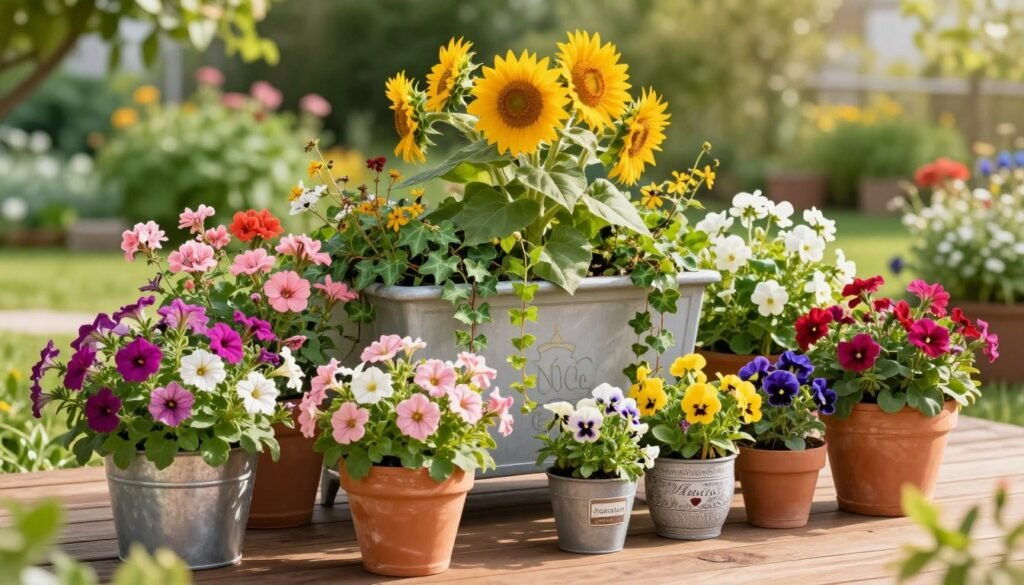
The journey to beautiful potted flowers starts with choosing the right container. Several factors are important for the health and look of your flowers.
Materials: Clay, Plastic, and Metal
Containers come in many materials, each with its own benefits.
- Clay Pots: Terracotta pots are loved for their breathability and natural look. But, they can dry out fast.
- Plastic Pots: Plastic pots are light and easy to clean. They’re not as pretty but are cheap.
- Metal Containers: Metal pots bring a modern look to your garden. But, they can get too hot in the sun, harming roots.
Sizing: Matching Pot Size to Flower Type
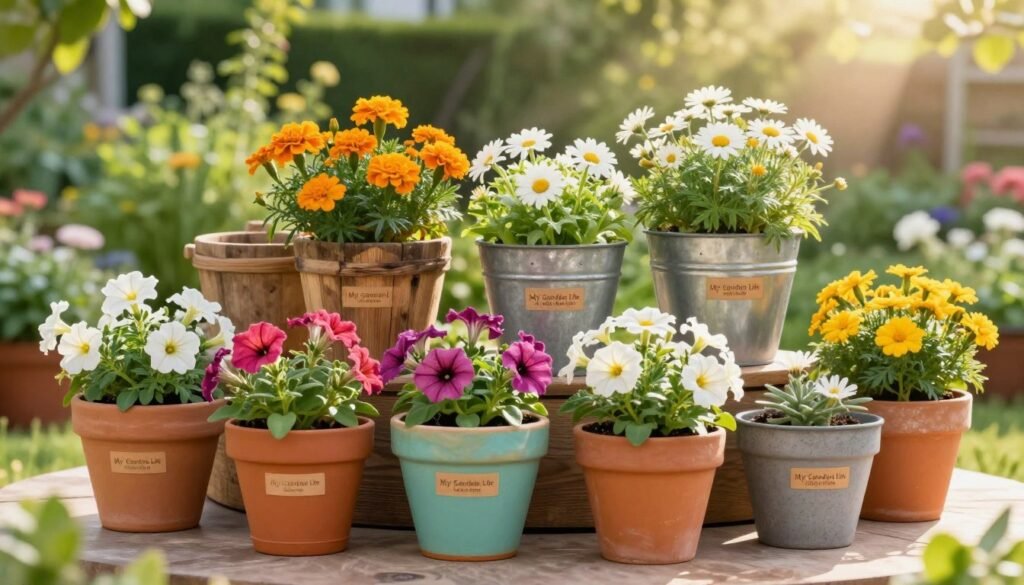
The container size should match the flower type.
- Small Plants: Small flowers or herbs need pots that are 15-20 cm deep.
- Medium Plants: Most flowers do well in pots that are 25-30 cm deep.
- Large Plants: Big flowers or those that spread out need pots that are 35 cm or deeper.
Drainage Considerations
Good drainage is key to stop waterlogged soil. This can cause root rot and other issues.
- Make sure your container has holes in the bottom for drainage.
- Use small rocks or broken pottery at the bottom to help with drainage.
By thinking about these points, you can pick the best container for your flowers. This will help them thrive.
Selecting the Perfect Flowers
Starting a beautiful balcony garden means picking the best plants for pots. We’re here to help you choose. The right flowers can make your outdoor space lively and peaceful. Think about the type of flowers, how they grow, and the local weather.
Annuals vs. Perennials for Pots
First, decide between annuals and perennials. Annuals live for a year and bloom all season. Perennials come back every year, giving you flowers for years.
Annuals like petunias and marigolds add color. Perennials like daylilies and coneflowers are beautiful and need less care.
Top Flower Varieties for UK Gardens
In the UK, many flowers grow well in pots. Some of the top flower varieties are:
- Petunias
- Geraniums
- Fuchsias
- Begonias
- Violas
These flowers are not only pretty but also easy to look after. They’re great for all gardeners.
Seasonal Blooms: What to Plant When
To keep your balcony garden lively all year, plant flowers that bloom in different seasons. Spring bulbs like tulips and daffodils bloom first. Then, summer flowers like sunflowers and dahlias follow.
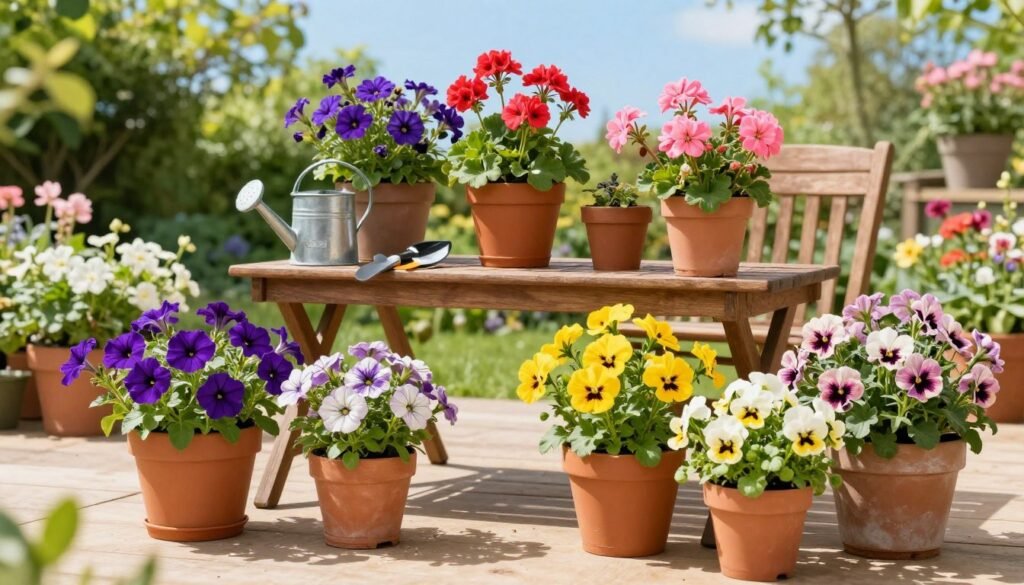
By picking the right flowers for your pots, you can have a thriving balcony garden. It will add joy and beauty to your outdoor space.
Preparing the Soil Mix
A good soil mix is key for a healthy potted flower garden. It’s vital for the health and beauty of your flowers. We’ll show you how to make a mix that drains well, what to put in it, and how to add fertilisers.
Importance of Well-Draining Soil
Soil that drains well is essential for potted plants. It stops the soil from getting too wet, which can harm the roots. Good drainage lets roots get enough oxygen for healthy growth.
- Prevents waterlogging and root rot
- Ensures roots receive adequate oxygen
- Reduces the risk of nutrient deficiencies
Recommended Soil Components
A good mix for pots should have nutrients, drain well, and hold moisture. We suggest a mix with:
- Compost or well-rotted manure for nutrients
- Peat or coconut coir to keep moisture in
- Perlite or vermiculite for better drainage
Enhancing Soil with Fertilisers
Fertilisers can make your soil better, giving your flowers the nutrients they need. Slow-release fertilisers work well because they feed your plants over time.
- Choose a balanced fertiliser for general use
- Consider slow-release fertilisers for sustained nutrition
- Follow the manufacturer’s instructions for application rates
With the right soil mix and fertilisers, your potted flowers will thrive. They’ll grow strong and bloom beautifully.
Watering and Maintenance Tips
To keep your potted flowers thriving, mastering watering and maintenance is key. Proper care keeps your container garden healthy and vibrant all season.
Watering Frequency for Potted Flowers
Watering frequency varies based on flower type, pot size, and weather. Check soil moisture by inserting a finger up to the first knuckle. If it’s dry, it’s time to water.
Tips for watering:
- Water in the morning to reduce evaporation and prevent fungal diseases.
- Avoid getting water on leaves to prevent fungal infections.
- Use room temperature water to avoid shocking the roots.
Signs of Overwatering or Underwatering
Recognising signs of overwatering and underwatering is crucial. Overwatering causes root rot, while underwatering stresses the plant.
Signs to watch out for:
- Yellowing leaves or droopy stems may indicate overwatering.
- Wilting or crispy leaves suggest underwatering.
- Check for root rot by gently removing the plant from its pot.
Pruning and Deadheading Techniques
Regular pruning and deadheading are essential for your potted flowers’ health and appearance. These practices encourage new growth, promote blooming, and prevent seed production.
Pruning tips:
- Remove dead or damaged stems to prevent disease spread.
- Cut back perennials to the ground after flowering to encourage new growth.
- Use clean and sharp pruning tools to prevent spreading diseases.
By following these tips, you’ll create a stunning container garden that will impress your neighbours.
Pest and Disease Management
To keep your potted flowers thriving, it’s key to manage pests and diseases well. Potted flowers face many issues, like aphids and slugs, and fungal infections. Knowing common problems and taking steps to prevent them helps keep your plants healthy and vibrant.
Common Pests in Potted Flowers
Potted flowers attract pests like aphids, whiteflies, and slugs. These pests harm plants by sucking sap or chewing leaves and flowers. It’s important to check your plants often to spot these problems early.
Preventative Measures for Healthy Plants
To stop pests, keep your garden clean, remove weeds, and check your plants often. Using a potting mix that drains well and not overwatering also helps. In small space gardening, like with urban gardening techniques, controlling pests is vital for your plants’ health.
Eco-Friendly Pest Control Options
For green solutions, there are many good options. You can introduce beneficial insects, use neem oil, or apply physical barriers. These methods help control pests without harming the environment.
Other green pest control methods include:
- Using compost to improve soil health
- Encouraging beneficial insects like ladybugs and lacewings
- Avoiding chemical pesticides
Seasonal Care for Potted Flowers
As the seasons change, our balcony flower garden needs care. We must adjust to keep our potted flowers healthy and beautiful. Proper care is key for a vibrant flower display all year.
Protecting Plants in Winter
Winterising your potted plants is crucial. Move them to a sheltered spot or use insulation like bubble wrap. Water less, as plants grow slower in cold weather.
Preparing for Spring
Spring is coming, so prepare your containers. Check the soil and repot if needed. Prune dead stems and add a balanced fertiliser for growth.
Now’s the time to pick flowers that love the warmer months. Follow these tips for a blooming balcony garden all year.