Starting your dream garden can feel scary. But, with the right help, anyone can plant flowers with ease.
At “My Garden Life,” we love helping you grow your garden. We’ll give you the best tips for starting your gardening adventure. You’ll learn how to make your garden beautiful and full of life.
We’ll teach you the basics to start your gardening journey. You’ll feel supported every step of the way.
Understanding the Basics of Flower Planting
If you’re new to gardening, knowing the basics of flower planting is essential. We’ll cover key points to help you grow a beautiful flower garden.
Importance of Timing in Planting
Timing is crucial when planting flowers. Each season is best for different types of flowers. For example, spring is great for bulbs like tulips and daffodils.
Autumn is better for planting perennials that need cold weather to bloom in spring.
Seasonal Considerations:
- Spring: Ideal for bulbs and early bloomers.
- Summer: Suitable for annuals and heat-loving plants.
- Autumn: Best for perennials that need cold stratification.
- Winter: A good time for planting bare-root plants and preparing soil for the next growing season.
Choosing the Right Location
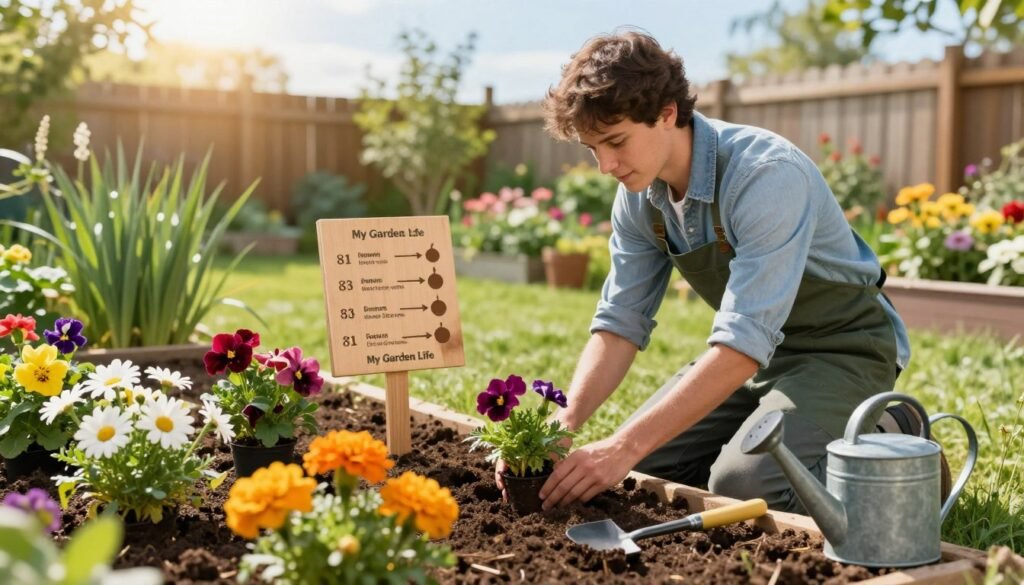
The spot where you plant flowers greatly affects their growth. Consider sunlight, soil type, and wind protection.
Key Location Factors:
- Assess sunlight exposure: Most flowers need at least 6 hours of direct sunlight.
- Consider soil type: Different flowers do well in different soils, from clay to sandy.
- Ensure wind protection: Delicate flowers need protection from harsh winds.
Soil Preparation Essentials
Soil preparation is vital in flower planting. It means testing your soil and making it better if needed.
Soil Preparation Steps:
- Test your soil: Find out its pH level and nutrient content.
- Amend the soil: Add compost to improve soil structure and fertility.
- Till the soil: Loosen it to a depth of 8-10 inches for better root growth.
Selecting the Right Flowers for Your Garden
The key to a thriving garden is choosing flowers that fit your local climate and soil. For planting flowers for beginners, knowing the basics of flower selection is key.
Annuals vs. Perennials
First, decide between annuals and perennials. Annuals live for a year and need replanting each season. Perennials come back year after year, offering long-lasting flowers.
Annuals like marigolds and petunias add colour quickly. Perennials, such as roses and lavender, offer beauty with less work.
Best Flower Varieties for Beginners
Beginners should start with hardy, easy-to-grow flowers. Sunflowers, zinnias, and daisies are good choices. They’re easy to care for and grow well in many conditions.
- Sunflowers: Brighten up any garden with their tall, cheery blooms.
- Zinnias: Come in a variety of colours and are perfect for cut flower arrangements.
- Daisies: Classic and cheerful, daisies are a timeless addition to any garden.
Considerations for Your Climate
Knowing your local climate is crucial when picking flowers. Some flowers handle extreme weather better than others. For example, succulents are great for dry areas.
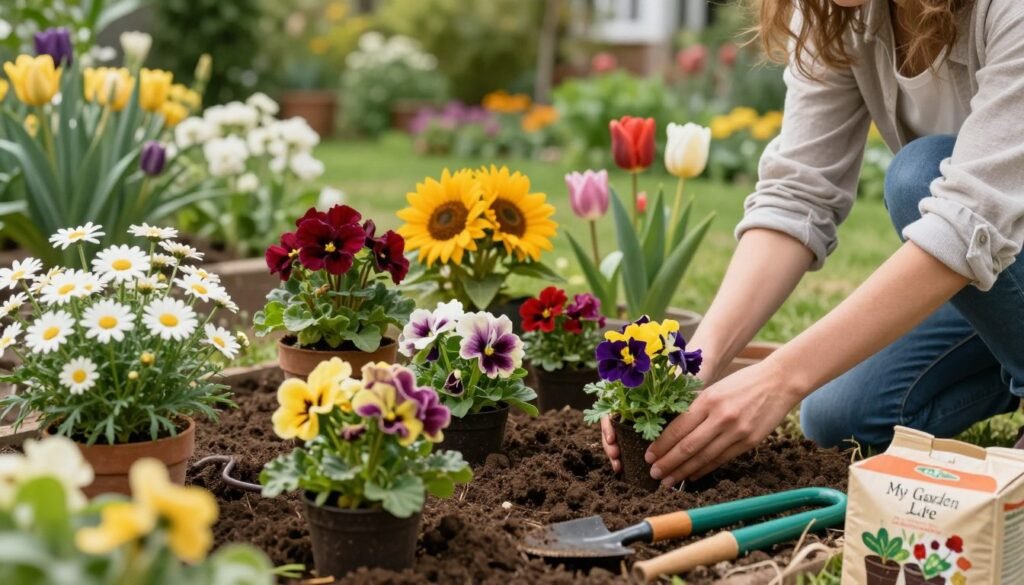
By thinking about your climate and choosing flowers wisely, you can have a lively and healthy garden. Learning about the needs of your chosen flowers helps make smart choices.
Essential Tools and Equipment for Planting
Planting flowers needs the right tools for success. The right equipment makes gardening easier and improves your garden’s health and beauty.
Gardening Essentials
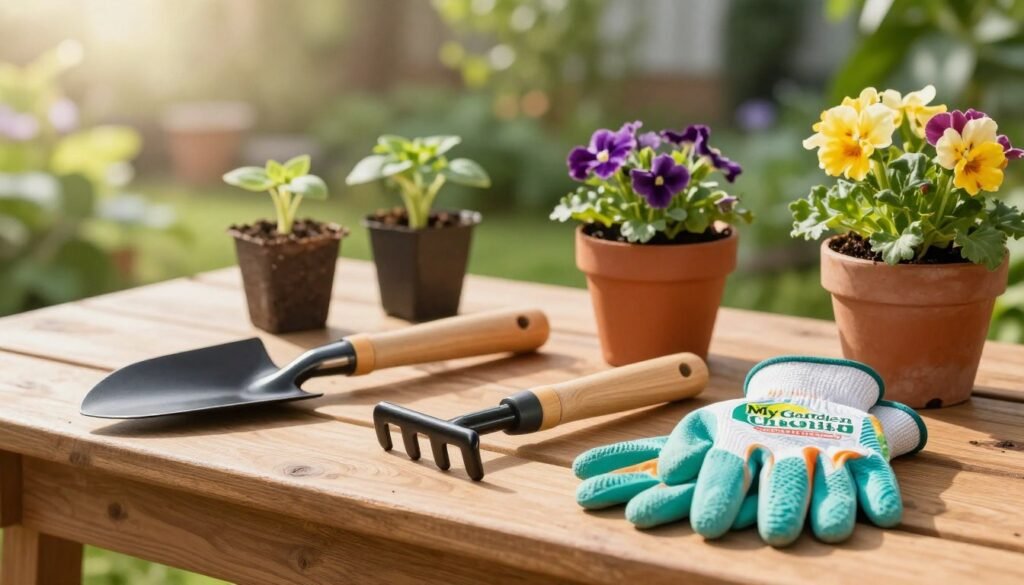
Some tools are must-haves for gardeners. These include:
- Trowel or Small Shovel: For digging holes and mixing soil.
- Gardening Gloves: Protect your hands from thorns and dirt.
- Rake: Helps level soil and remove debris.
- Watering Can or Hose: For watering plants efficiently.
Advanced Gardening Tools
As you get better at gardening, you might need these tools:
- Transplanter: Transfers plants without harming their roots.
- Garden Fork: Turns over soil and compost.
- Pruning Shears: Trims and shapes plants.
Tool Maintenance
Keeping tools in good condition is important. Here’s how:
- Clean tools after each use to stop rust and soil buildup.
- Store tools in a dry place, away from sunlight.
- Sharpen cutting tools often to keep them sharp.
Preparing Your Garden Space
To make a beautiful flower garden, we must first prepare the garden space. This means designing the flower bed, improving the soil, and checking its quality. This step is key for a successful flower garden.
Designing Your Flower Bed Layout
Designing a flower bed layout is the first step. We need to think about the look we want and the size of the plants. A good layout lets our flowers grow well and get enough sunlight.
When planning, consider the colours and textures of the flowers. Mixing annuals and perennials adds interest all year. We can use a simple grid or a more complex design, depending on our taste and the garden bed’s shape.
Techniques for Soil Improvement
Improving the soil is vital. We can make the soil better by adding compost or well-rotted manure. These help the soil hold water, drain well, and grow plants better.
- Compost adds nutrients and improves soil structure.
- Manure gives plants the nutrients they need to grow.
- Peat moss or coconut coir helps the soil hold water better.
How to Test Your Soil Quality
Testing the soil quality is crucial before planting. We can buy a soil testing kit or send a sample to a lab. The results show the soil’s pH and nutrient levels, helping us choose the right amendments.
- Collect a soil sample from different parts of the garden.
- Follow the kit or lab’s instructions.
- Change the soil’s pH and nutrient levels based on the test.
By following these steps, we can get our garden ready for planting. This gives our flowers the best chance to grow well. For more beginner flower planting tips, check out more flower gardening resources.
Planting Techniques for Success
For new gardeners, knowing how to plant flowers is key. We’ll look at the main steps for planting flowers well. This will help beginners start their gardening journey.
How Deep to Plant Your Flowers
Planting flowers at the right depth is crucial. A good rule is to plant them 2-3 times their mature height deep. But, this can change based on the flower type.
- Bulbs: Plant bulbs like tulips and daffodils 2-3 times deeper than the bulb height.
- Seeds: Sow seeds at a depth shown on the seed packet, usually 1-2 times their diameter.
- Seedlings: Plant seedlings at the same depth as in their pots.
Spacing Guidelines for Optimal Growth
Spacing flowers right is key to avoid overcrowding. This can harm growth and make plants more prone to disease. The space between flowers depends on their size when fully grown.
- Check the seed packet or plant label for specific spacing recommendations.
- For larger flowers, a spacing of 12-18 inches is often recommended.
- Smaller flowers can be planted closer together, typically 6-12 inches apart.
Watering Techniques After Planting
Watering right after planting is vital for a strong root system. It’s important to water well but not too much. Too much water can harm the plants.
- Water flowers immediately after planting.
- Keep the soil consistently moist during the first few weeks after planting.
- Avoid getting water on the leaves to prevent fungal diseases; instead, water at the base of the plants.
By using these planting tips, beginners can do well in gardening. Remember, it’s okay to make mistakes. Practice helps improve.
Caring for Your Flowers After Planting
Planting is just the start. Caring for your flowers is key to their health and beauty. We’ll show you how to care for your flowers so they grow well in your garden.
Watering Regimens and Tips
Watering is very important for flowers. You need to water right to avoid too little or too much. Check the soil moisture by feeling it with your finger. If it’s dry, it’s time to water.
- Water in the early morning or late evening to save water.
- Use a gentle stream to avoid washing away soil or harming plants.
- Don’t get water on leaves to stop fungal diseases. Water at the base instead.
Fertilisation Basics for Beginners
Fertilisation gives flowers the nutrients they need. Start with a balanced, all-purpose fertiliser if you’re new. Follow the package for how much and how often to use.
- Pick a fertiliser that fits your flowers.
- Fertilise from spring to early autumn when plants are growing.
- Think about organic fertilisers for a better choice for the planet.
Pest Control Best Practices
Pests can harm your flowers. It’s important to spot and deal with them quickly. Common pests are aphids, slugs, and snails. Inspect your plants regularly and act fast.
- Choose organic pest control like beneficial insects or neem oil first.
- For big problems, use chemical pest control but follow the instructions carefully.
- Keep your garden clean to lower pest risks.
Troubleshooting Common Flowering Issues
Starting your flower planting journey can bring up some common problems. These issues can affect your garden’s health and success. Spotting these problems early is key to making sure your flowers do well.
Recognising Disease in Plants
Plant diseases show up in different ways, like discolouration, wilting, or fungal growth. Regular checks on your plants help you catch these problems early. This makes it easier to fix them.
Pest Control and Solutions
Pests like aphids, slugs, and snails can harm your flowers. Using organic or integrated pest management can solve these problems. It keeps your plants and the environment safe.
Knowing When to Seek Expert Advice
If you’re not sure how to fix a problem or if it won’t go away, get help. Talking to a gardening expert or a local nursery can help. They can guide you to fix your flower garden.